
Disability Justice
Women with disabilities are boldly working to usher in a more inclusive world. Explore what disability justice means and how World Pulse members are leading change.
What is disability justice?
Disability justice helps us understand how the intersection of ableism and race, gender, class, and sexuality affects the lives of people with disabilities. By centering historically excluded groups, the disability justice movement advances access and inclusion for everyone with disabilities. Disability justice is an important lens to consider within social justice to create a more accessible, inclusive world for all.
How are World Pulse members contributing to the disability justice movement?
Despite a myriad of challenges, including increased rates of violence, fewer opportunities to access education and employment, as well as rampant ableism and stigma, they are logging on to share stories and spotlight solutions to the most pressing issues and challenges facing women with disabilities today.
What are the disability justice principles?
There are 10 main disability justice principles that emphasize inclusion and collaboration.
- Intersectionality – Disabled people have different backgrounds and experiences regarding race, class, sexuality, age, immigration status, and other issues.
- Leadership of those most impacted – Disability Justice makes a point to center the leadership of the people most affected by ableism.
- Anti-capitalist politics – People’s worth does not depend on how much they can produce. All people deserve to have their needs met, regardless of their ability.
- Cross-movement solidarity – Disability Justice combines with other movements, such as racial justice and environmental justice, to become more united and comprehensive in their advocacy.
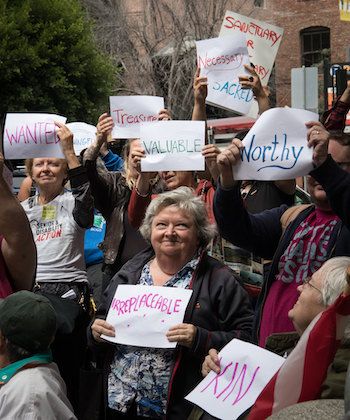
- Recognizing wholeness – The Disability Justice movement holds that disabled people are whole people – they are not less than others because of their disability.
- Sustainability – Disabled activists and advocates steadily work toward justice over time while pacing themselves.
- Commitment to cross-disability solidarity – Anyone who experiences ableism is included, whether they are chronically ill, neurodiverse, deaf, blind, mentally, intellectually, or developmentally disabled, physically disabled, or have any other disability.
- Interdependence – This principle centers around building a sense of community among disabled people and organizing together.
- Collective access – In the Disability Justice movement, access needs are welcomed, respected, and acknowledged.
- Collective liberation – This principle means envisioning a world that can be created when disabled people with various backgrounds and lived experiences come together to enact a movement of change.
How can you join the conversation on disability justice?
World Pulse is a safe social network for women and allies to gather, share stories, encourage each other, and access resources and leadership training to strengthen movements. We celebrate and honor the diverse experiences of people with disabilities. We are mobilizing disability justice leaders while creating a more accessible, inclusive online space for all. One of the most powerful defenses against exclusion we have is our stories. At World Pulse, we encourage you to share your experiences as a person with a disability or share your support for the disability justice movement. You can also find stories from women with disabilities to understand their lived experiences and the efforts they are leading. Imagine a truly accessible and inclusive world — what does it look like, and how can we get there?